Exploring Adobe Procreate: Tools and Techniques
Intro
In the realm of digital artistry, tools can make or break an artist’s vision. Adobe Procreate stands at the forefront, reshaping how both professionals and hobbyists approach creation. With a rich toolkit, this software goes beyond mere drawing; it embeds itself within the creative process, enabling fluidity and innovation. But how does it stack up against the competition? What sets it apart in the vast marketplace of digital applications? These questions are vital for tech enthusiasts and IT professionals who wish to understand this application not just as software but as part of the evolving ecosystem of digital tools.
Procreate boasts an assortment of features that addictive creators have quickly embraced. From brushes that mimic traditional materials to complex layering options, there’s a lot to discuss. You'll find that the software is designed with the user in mind, blending ease of access with depth of functionality. But, it’s not all rainbows and unicorns. There are limitations and hurdles to consider, especially for a burgeoning artist seeking to unravel its complexities. Thus, this exploration aims to provide an enlightening perspective on Procreate’s place in the digital art landscape.
As we delve deeper into this article, key aspects such as performance analysis, testing scenarios, and real-world implications will unfold. Artists and technologists alike should find value in understanding the nuances of Procreate, making this guide a crucial read. The potential impact on an artist's workflow and creativity lies at the heart of this discussion. Curious? Let’s dive in.
Prologue to Adobe Procreate
Adobe Procreate stands as a cornerstone in the realm of digital artistry, offering artists and designers an array of sophisticated tools that enable them to transcend traditional boundaries. The discussion around Procreate is not merely about another application; it’s about the impact it has on how digital art is created and perceived. Artists can harness Procreate's capabilities to channel their creativity and turn abstract ideas into tangible visuals. This introduction will shed light on the very fabric of what makes Procreate indispensable in contemporary digital painting and design.
Understanding Digital Art
Digital art represents a shift from conventional mediums to technology-driven creativity. It incorporates various forms like illustrations, animations, and graphic design. Artists now create works that were unthinkable a few decades ago. With Procreate, newcomers and seasoned professionals alike find that technology effectively mediates their artistic vision.
Digital tools can replicate traditional mediums very well—think of brushes, pencils, and even canvas—but they transcend them by offering dynamic layers and tools for adjustments. Furthermore, the portability of devices such as the iPad means artists can create wherever inspiration strikes, be it in a cozy coffee shop or during a commute.
With the power to draw, paint, and animate directly on a touchscreen, Procreate provides an accessible platform that challenges the norms of traditional art forms. Understanding digital art not only involves recognizing the tools at one’s disposal but also embracing the evolving landscape of how we appreciate creativity in a digital age.
History and Development of Procreate
Procreate was born from a simple idea: to make drawing easier and more intuitive for everyone, especially in a digital environment. Initially launched in 2011 by Savage Interactive, its journey has been nothing short of remarkable. The app started as a straightforward drawing tool with basic functionalities, catering primarily to enthusiastic novices.
As time passed, the team behind Procreate added features that catered to professional artists—advanced brushes, sophisticated layering systems, and various export options became common. The 2017 release of Procreate 4 was a game changer. It introduced animation features through Procreate Animation Assist, a move that caught the attention of many in the digital community. Artists were now able to create frame-by-frame animations seamlessly, blending traditional art principles with digital convenience.
The commitment to constantly improve and update the app has kept Procreate relevant in a competitive landscape filled with various digital art tools. Artists worldwide sing praises of its efficiency and power, reinforcing why it remains a top choice for both amateurs and established creators.
Key Features of Procreate
The significance of Procreate lies not just in its ability to produce stunning artwork but also in its innovative array of features that enhance the overall digital artistry experience. From intuitive design elements that cater to both newbies and seasoned pros to robust functionalities that streamline the creative process, Procreate's key features open new doors for exploration and expression. This section will dissect these pivotal components, shedding light on how they contribute to elevating digital art practices today.
User Interface Design
Procreate’s user interface is akin to a well-orchestrated symphony, enabling artists to jump into their creative flow without missing a beat. The layout is streamlined, focusing on a canvas rather than cluttering the screen with too many options. For someone unfamiliar with digital tools, this design approach can ease the learning curve significantly.
- Touch Gestures: Users can navigate effortlessly with fingers, performing actions like double-tapping to undo or pinching to zoom. This natural interaction mimics traditional art-making, which can be comforting for those transitioning from traditional media.
- Customizable Toolbar: The toolbar can be modified to show favorite tools prominently. This allows creators to work more efficiently, a crucial factor when inspiration strikes.
To sum up, the user interface design of Procreate speaks to both functionality and accessibility, making the software truly user-friendly.
Brush Customization Options
One of the standout features of Procreate is its extensive brush customization options. Procreate gives you the freedom to mold your brushes to suit your artistic needs, creating a one-of-a-kind toolkit that feels personalized.
- Diverse Brush Packs: Procreate comes loaded with various brushes that mimic traditional techniques, from oils to pencils. Each brush has unique settings such as opacity, size, and flow, which can be adjusted for desired effects.
- Creating Your Own Brushes: Notably, users can create custom brushes from scratch or modify existing ones. This level of customization allows artists to find their unique voice and share their creations within the Procreate community, enriching the experience for everyone.
By enabling this individual expression through brush customization, Procreate becomes not just a tool but a canvas for experimentation.
Layer Management Techniques
Layer management in Procreate is like having a well-organized art studio; it allows artists to juggle multiple elements without chaos. Layers enable users to separate different components of their artwork, providing the flexibility to manipulate each part independently.
- Layer Groups: Users can group layers together for better organization. This feature is particularly useful for complex pieces, helping maintain clarity amid the artistic process.
- Blending Modes: Procreate offers numerous blending modes, allowing users to control how different layers interact with one another. This capability adds depth and richness to the artwork, opening a realm of creative potential.
- Alpha Lock and Clipping Masks: Utilizing features like alpha lock lets you paint only on the pixels of the selected layer, while clipping masks allow for elaborate designs without permanently altering the original layers.
In sum, Procreate’s layer management not only keeps creative projects organized but also expands the possibilities of what artists can achieve with their artwork.
Understanding these key features clarifies how Procreate transforms artistic workflows, allowing room for infinite creativity and enhancement.
Tools and Functions
In the world of digital art, the tools and functions available can make or break an artist's workflow. Adobe Procreate stands out with its robust set of tools designed not just for professionals but also for enthusiasts looking to bring their ideas to life. By offering a blend of traditional artistry techniques and modern technology, Procreate shifts the way artists create. Understanding these tools is crucial for maximizing their potential and harnessing the full power of the software.
Selection and Masking Tools
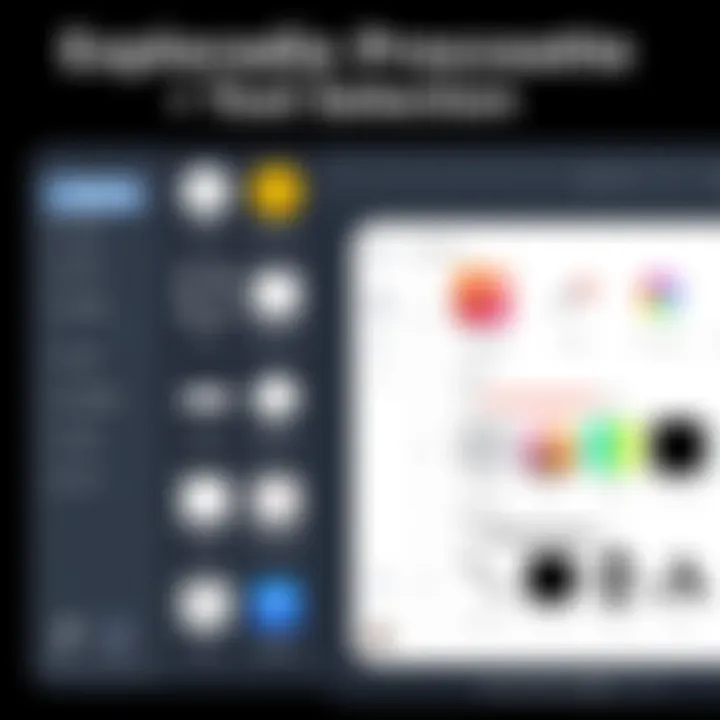
Selection and masking tools serve as essential assets in Procreate, allowing artists to focus on specific sections of their artwork without interference from the rest. Imagine you’re crafting a lush landscape, and you want to tweak a mountain peak without affecting the sky. Procreate’s selection tool lets you create a defined area for changes, enabling subtle adjustments or bold transformations.
Masking offers another layer of control. This feature allows for non-destructive editing: you can brush over areas to reveal or conceal parts of your artwork without permanently altering the original content. Here’s why that matters:
- Precision: Manipulate precisely the area you want, leading to cleaner results.
- Flexibility: Change your mind? Easy! Just adjust your mask instead of starting over.
- Efficiency: Speed up your workflow by selecting and masking swiftly, so you can spend more time on creativity than corrections.
"Selection and masking in Procreate are like having your very own control room. You fine-tune without losing what you’ve built."
Color Theory in Procreate
Understanding color theory is key to crafting visually appealing artwork, and Procreate enhances this learning curve through its intuitive color palettes and adjustment tools. From striking contrasts to smooth gradients, color can evoke emotions and guide viewer perception. Procreate provides a well-thought-out color wheel that allows for easy exploration of color harmonies and combinations.
- Color Harmony: Use analogous, triadic, or complementary color schemes to create cohesive visuals. Each of these schemes can produce different moods and styles in your art.
- Color Adjustments: With Procreate’s color adjustment options, artists can easily alter saturation, brightness, and hue to ensure their palette aligns with their creative vision.
- Real-time Feedback: As you choose colors, you can see changes instantly, which allows for better decision-making on the fly.
This makes Procreate a playground for those fascinated by hues and tones, ultimately helping artists develop their unique color style.
Effects and Filters
Procreate’s range of effects and filters adds another layer of depth to the artistic process, enabling creators to enhance their outputs dramatically. These features can turn a simple sketch into something dynamic and engaging.
- Blur Effects: Subtle blurring can guide focus within a piece, making certain elements pop.
- Textures: Add texture overlays to give your artwork a more tactile and poignant feel, emulating traditional media or creating new styles altogether.
- Layered Filters: You can stack filters for complex effects, ensuring your creativity knows no bounds. With the flexibility of layering, you can experiment without the worry of committing to a single effect.
By understanding how to effectively implement these effects, artists can elevate their works well beyond initial expectations, creating images that not only catch the eye but also convey narratives.
In sum, the tools and functions of Procreate form the backbone of the digital artistry experience. They empower artists to manipulate their creations at every level, making it essential for anyone venturing into this vibrant landscape to familiarize themselves with these attributes.
Techniques for Effective Usage
Understanding the nuances of digital art becomes crucial when diving into applications like Procreate. Creating artwork that speaks to the soul often hinges on effective techniques that harness the strengths of the tool at hand. In this section, we explore how mastering certain techniques in Procreate not only empowers artists but also enhances their workflow.
Creating Custom Brushes
Brushes in Procreate are not just simple tools; they are extensions of an artist's style and vision. The ability to create custom brushes is perhaps one of the most empowering features of the application. What makes this so vital? Well, artists can design brushes tailored to their specific needs, from soft watercolor washes to sharp, detailed pencil strokes. This customization isn’t just about aesthetics; it's about efficiency and finding one's voice in a crowded digital landscape.
When designing a brush, it’s essential to consider the texture and control. Procreate allows artists to adjust parameters like spacing, streamline, and jitter, which significantly affect the final output. For example, increasing the spacing gives a dotted effect, which can be quite useful for creating backgrounds or textures. Here’s a brief guide on how to create a custom brush in Procreate:
- Open the Brush Studio.
- Select a base brush that closely matches your desired outcome.
- Adjust settings under the Properties tab to tune your brush.
- Experiment with Shape and Grain settings to achieve the right look.
- Save your brush for future use.
Creating these brushes can feel like alchemy, turning ordinary strokes into magical designs. It's no wonder that many artists view this feature as a gateway to unparalleled creativity.
Utilizing Advanced Layer Techniques
The power of layers in Procreate is like having a sophisticated toolkit. Advanced layer techniques enable artists to manage complexity without chaos. Using layers allows creators to separate elements of their artwork, making it easy to adjust or refine parts without disturbing the whole piece.
One key advantage of layers is the ability to use layer masks. This technique allows artists to apply effects or colors selectively. For instance, if an artist wishes to apply a gradient only to a specific area, a layer mask can achieve this without affecting the underlying layers.
Moreover, blending modes introduce another layer of complexity (pun intended) to artwork, letting artists blend colors and textures in creative ways. Here are some common practices:
- Use groups to manage related layers easily.
- Experiment with opacity to create depth in compositions.
- Take advantage of clipping masks to restrict changes or effects to specific layers.
"The beauty of layers is that they provide flexibility. Artists can experiment without the fear of making lasting mistakes."
By mastering these advanced techniques, digital artists can polish their work to perfection, ready to engage audiences with every stroke.
Through effective usage techniques in Procreate, artists can dramatically improve their creative outputs, showcasing their work in ways that might have once seemed unattainable.
Collaboration and Sharing Capabilities
When it comes to digital art, having a strong framework for collaboration and sharing can make a world of difference for artists. Adobe Procreate stands out not just for its array of powerful tools, but also for the way it facilitates collaboration among creators. In an environment that fosters creativity, the ability to share artwork seamlessly can be a game-changer. But let’s take a closer look at how these capabilities manifest in Procreate.
Exporting Projects and Formats
The exporting features in Procreate offer a versatile range of options, catering to diverse needs. From seamless sharing to advanced formats, artists can easily push their projects beyond the confines of the app. Users can export in various formats, substantial for maintaining quality while adapting to different platforms—be it print, Web, or social media.
- Common formats include:
- PNG: Great for maintaining transparency.
- JPEG: Ideal for quick sharing online.
- TIFF: High quality for print purposes.
- PSD: Essential for those who wish to continue editing in Adobe Photoshop.
This flexibility ensures artists do not need to compromise quality to share their work with others or utilize it across multiple platforms.
"When artists can share their work easily, the entire creative community thrives. Collaborations spark, ideas flourish, and the possibilities become endless."
Also, exporting is not just about formats; it involves batch exports as well. If an artist is working on a series, Procreate allows for the quick exporting of multiple pieces, which enhances efficiency significantly.
Integrating with Adobe Creative Cloud
Incorporating Procreate with Adobe Creative Cloud further elevates the sharing and collaboration experience. This integration serves as a bridge connecting desktop software with mobile artistry, expanding the horizons for users in their creative processes. By syncing projects across various devices, artists can pick up where they left off, regardless of location.
- Key benefits of this integration include:
- Cloud Storage: Safeguard projects against data loss while making them accessible at any time from any device.
- Cross-Compatibility: Projects can be imported into sophisticated Adobe tools like Illustrator or Photoshop for additional processing.
- Collaborative Features: Team members can access shared projects, comment, and make adjustments in real-time, fostering a more coherent workflow.
This synergy encourages a more collaborative approach to digital artistry, connecting artists to a broader network of creative professionals. It positions Procreate not just as a standalone application but as a critical piece in a vast digital artistry puzzle.
Practical Applications of Procreate
Adobe Procreate has become synonymous with modern digital artistry, making waves in both professional and enthusiast circles. Its intuitive tools and expansive features open the door to countless creative pursuits. This section shines a light on the practical applications of Procreate, emphasizing its significance in various artistic fields.
Key Benefits of Using Procreate in Practical Settings
When discussing the significance of Procreate, it’s essential to highlight that its versatility caters to various artistic needs. Artists can harness its capabilities to create artworks suited for both print and digital platforms. Whether it's a budding artist drafting their first piece or a seasoned illustrator working on a commercial project, Procreate serves as a reliable companion.
Illustration for Print and Digital Media
Illustration is arguably one of Procreate's strongest suits. The application allows creators to craft detailed visuals tailored for both print and digital media. Artists can work with high-resolution canvases, making it feasible to produce images suitable for magazine covers, posters, or even book illustrations.
- Precision and Detail: The ability to zoom in on intricate details means artists can produce work that is both stunning and precise. This aspect becomes particularly crucial when preparing files for print, where clarity is essential.
- Color Management: Procreate supports various color profiles, including CMYK, which is vital for print projects. Artists can switch between different profiles, ensuring that their work retains its vibrancy across mediums.
- Easy Export Options: Once the artwork is complete, Procreate provides multiple export options, allowing artists to choose formats that best suit their needs, whether it be JPEGs, PNGs, or even layered files for further editing in software like Adobe Photoshop.
In terms of digital media, Procreate excels in creating content for apps, websites, and social media. The rise of platforms like Instagram has created a demand for unique digital illustrations, and Procreate caters to this niche effectively. Artists can create dynamic and engaging content that captures the viewer's attention good and proper.
Animation Capabilities
Beyond static illustrations, Procreate also taps into the world of animation, offering features that appeal to animators at all skill levels. The process of animating within Procreate is streamlined, allowing artists to sketch, inbetween, and export animations with ease. This is a significant advantage, considering that many digital animation tools require steep learning curves.
- Animation Assist: This feature simplifies the animation process. It aids in frame-by-frame drawing, making it easier for artists to visualize motion. The onion skinning feature allows artists to see previous frames as they draw, facilitating smoother transitions and more fluid animations.
- Exporting Animations: Once an animation is complete, Procreate allows artists to export their work as GIFs or videos. These formats are perfect for sharing on social media or integrating into larger projects.
- Interactivity: Procreate encourages experimentation. Artists can overlay illustrations with animated components, breathing life into their projects and enhancing viewer engagement. This interactivity extends to creating fun, looped animations that captivate audiences.
"Procreate turns a simple drawing into a living piece of art that captures the essence of creativity."
In summary, Procreate not only empowers artists to create high-quality illustrations but also allows for exciting expansions into the world of animation. As the lines between traditional and digital art continue to blur, Procreate stands at the forefront, providing the tools necessary to thrive in both print and digital media.
Pros and Cons of Adobe Procreate
Exploring the pros and cons of Adobe Procreate is essential when considering its impact on digital artistry. As an influential tool for creative individuals, understanding its strengths and weaknesses can greatly assist artists and designers in making informed choices. This section digs into the particular elements that make Procreate a favored choice for many, alongside the challenges users may encounter.
Advantages for Digital Artists
One of the most significant advantages of using Procreate is its user-friendly interface. The app’s layout is tailored for touch-based interaction, making it remarkably intuitive. Artists can navigate easily and access tools without fuss. The range of customizable brushes also stands out, allowing creators to develop their unique styles. This is not just about preset brushes; it's the ability to tweak size, texture, and dynamics to seemingly infinite possibilities.
Moreover, Procreate supports high-resolution canvases, accommodating details that pencil and paper can't match. Artists can create prints that preserve crispness and clarity, which is vital for professional outputs. The capacity for layers in Procreate is another feather in its cap; layers can be added, merged, or adjusted with seamless efficiency, enhancing creative flexibility.
Additionally, artists find the animation capabilities within Procreate a game-changer. It allows for a range of animation tasks, from simple frame-by-frame to complex GIFs. For many creators, this blending of illustration and animation is a new playground, opening avenues to express ideas dynamically.
"The design flexibility with Procreate is like having endless canvases and tools at your fingertips. It breathes new life into my artwork."
— A Procreate Enthusiast
Limitations and Challenges
However, even the brightest stars have their shadows. Procreate is not without its limitations. For instance, its exclusivity to iOS can be a considerable drawback. Artists using other ecosystems, especially Windows or Android, may feel left out. This restriction limits potential users and may deter those who prefer a multi-platform experience.
The app also lacks some advanced features that professionals might expect from desktop software. For example, robust 3D capabilities are minimal compared to specialized software like ZBrush. This can be a stumbling block for artists who want to create detailed three-dimensional models.
Moreover, while the application boasts exceptional brush customization, it can overwhelm newcomers. In such a vibrant ecosystem of options, a novice might find it hard to know where to start—a double-edged sword.
Ultimately, understanding the pros and cons of Adobe Procreate helps artists to leverage its strengths while navigating its challenges. By keeping a realistic view on what the software can and cannot do, they can enhance their artistic practice effectively.
Case Studies and User Experiences
When discussing Adobe Procreate, it's essential to delve into Case Studies and User Experiences. These elements provide a rich context, highlighting how various artists leverage the app's features and functionality. They also shed light on the practical implications of Procreate in day-to-day digital artistry, offering insights beneficial for both established professionals and newcomers alike.
Real-world examples serve to bridge the gap between theoretical knowledge and applied skills. Whether one is a seasoned digital artist or a casual user, understanding how others navigate Procreate can illuminate pathways for creativity and technical proficiency.
Benefits of Case Studies
- Insight into Workflow: Professionals share how they integrate Procreate into their creative process, from sketching through to final touches.
- Inspiration: Observing the innovative ways in which others use the tool can spark new ideas or techniques for aspiring artists.
- Understanding Limitations: By examining real user experiences, prospective users can learn about the challenges faced under various scenarios, guiding their approach to maximizing Procreate’s potential.
Success Stories from Professionals
The successes of professionals using Procreate illustrate the program's capacity to elevate artistic work to new levels. For instance, renowned illustrator Lisa Congdon has harnessed Procreate to produce vibrant, intricate illustrations that capture her signature style. She's noted how the layering capabilities of Procreate allow for more dynamic compositions and revisions, ultimately saving her time in production.
Another example is graphic designer James Victore, who utilizes Procreate for on-the-go sketches that later evolve into full-fledged designs. His enthusiasm for using Apple Pencil speaks volumes about how Procreate enhances spontaneous creativity. These narratives exemplify how Procreate is not merely a tool but a crucial partner in an artist's journey.
Learning Curve for New Users
For newcomers, the road to mastering Procreate can feel daunting. However, it's significant to recognize that the learning curve is often less steep than anticipated. Tutorials abound online, from YouTube videos to dedicated forums on platforms like Reddit. These resources can simplify the initial stages of learning, demystifying terms like layer management or brush customization.

New users might encounter challenges such as navigating the interface or fully understanding the application’s myriad features. But here’s the kicker: this initial struggle often leads to substantial growth. As new users begin to explore, they gain valuable skills that contribute to their artistic development.
"Every artist was first an amateur." - Ralph Waldo Emerson
Most importantly, the Procreate community is welcoming and supportive. Artists often share tips and tricks, easing the journey for those just starting out. Engaging with this network can make a significant difference, allowing new users to learn efficiently and enjoyably.
In summary, examining Case Studies and User Experiences reveals how Procreate functions in the real world, providing insights that can help artists refine their approach, learn from others, and develop their personal style. Indeed, understanding these dynamics is invaluable when considering the application’s impact on digital artistry.
Comparative Analysis with Other Digital Art Tools
When engaging with the digital art landscape, it becomes essential to step back and evaluate how tools stack up against one another. By conducting a comparative analysis, artists and tech enthusiasts gain clearer insights into the strengths and weaknesses of various programs. This understanding can guide them in selecting the right tool that aligns with their artistic vision and workflow preferences.
Procreate vs. Adobe Fresco
In the realm of digital tools, Procreate and Adobe Fresco are two heavyweights that often find themselves in a friendly rivalry. At first glance, both applications cater to a broad spectrum of artists, from amateurs sharing their talent on social media to professionals crafting intricate designs. However, despite their similarities, there are notable differences that influence user experience.
User Experience and Accessibility
Procreate, available exclusively on iOS, has a reputation for its intuitive interface that appeals to both beginners and seasoned artists. Users frequently highlight how the app feels fluid, with gesture controls that seamlessly integrate into their creative flow. On the other hand, Adobe Fresco is designed primarily for touch devices, drawing on Adobe’s legacy in desktop software. While this blend can work well, some users assert that Fresco’s interface can feel busy and less accessible than the streamlined layout of Procreate.
Brush and Customization Options
When it comes to brush functionality, Procreate shines. Users often rave about the extensive customization features allowing them to create brushes tailored to their unique styles. Conversely, Adobe Fresco introduces a diverse range of live brushes that mimic real-world painting techniques. Each has its merits; however, Procreate seems to have the edge for those who prioritize deeper customization in their workflow.
"Ultimately, the choice between Procreate and Adobe Fresco hinges on individual needs and preferences. Both tools have their unique flavor that can inspire creativity in diverse ways."
Pricing Model
Procreate has a simple, one-time purchase model, which has made it widely accessible. Adobe Fresco typically requires a subscription, adding a layer of financial commitment that some artists may find burdensome. This might influence new users deciding which platform to invest in.
Addressing Competition: Corel Painter
Diving into another competitor, Corel Painter deserves a mention. While widely recognized as a stalwart in traditional art simulation, it presents a more complex interface and learning curve compared to Procreate and Adobe Fresco.
Realism and Customization
Corel Painter is known for its realistic brushes and vast variety of textures. Artists who prefer their digital artwork to mimic traditional techniques often lean towards Corel. However, this can come with the cost of complexity and a less user-friendly experience. In contrast, Procreate manages to combine a friendly interface with powerful capabilities, allowing artists to achieve impressive results without the steep learning curve.
Cross-Platform Use
A strong point for Corel is its availability across multiple platforms. This can be advantageous for professionals who frequently switch between devices. However, the seamless experience that Procreate provides on iOS devices, where the pressure sensitivity and touch interactions feel incredibly organic, can be hard to replicate on other platforms.
In summary, the comparative analysis of Procreate with Adobe Fresco and Corel Painter reveals that each tool serves unique audience segments. Artists should weigh their personal preferences, project requirements, and budgets to find the tool that best enhances their creativity.
The Future of Digital Art with Procreate
In the quickly evolving realm of digital art, the role of tools like Procreate cannot be overstated. As technology advances, so do the methods and practices artists employ to express creativity. Procreate stands at the forefront of this transformation, playing a pivotal part in shaping how we create and consume art today and into the future. This section digs deep into what lies ahead for digital artistry, particularly highlighting Procreate's impact on the artistic landscape.
Evolving Technology and Artistic Practices
The integration of technology into art has always been a double-edged sword. Artists continuously adapt to new tools, shifting their practices to embrace innovative techniques and platforms. Procreate, with its intuitive interface and robust capabilities, has catalyzed a change in how artists approach their work. As mobile devices become increasingly powerful, the possibility of creating on-the-go empowers artists to develop their skills in a variety of environments.
The user-driven customization of Procreate also allows artists to transcend traditional boundaries. Custom brushes and unique workflows tailor their craft to individual styles, often reflecting cultural influences and personal narratives.
"Procreate is not just a tool; it reshapes creativity itself, letting artists articulate their vision in ways that were once unimaginable."
As digital technology evolves, we can anticipate the following trends in the usage of Procreate:
- Increased Use of AI: Integrating artificial intelligence with Procreate could offer smarter tools that predict user behaviors, providing suggestions for color palettes, composition, and even style adaptations based on current trends.
- Enhanced Collaboration Features: As remote work becomes the norm, collaborative platforms that integrate with Procreate may emerge, allowing artists across the globe to work on projects in real-time, sharing insights and techniques seamlessly.
- Greater Access to Learning: Procreate's community and user forums will likely expand, offering workshops and tutorials that help users navigate advanced techniques, and effectively utilize new updates.
Predictions for Updates and Features
As the digital art scene becomes more competitive, Procreate's developers are expected to roll out several updates and new features that keep pace with user needs and expectations. The emphasis on mobile and accessibility will likely lead to innovative changes in functionality, including:
- Augmented Reality (AR) Features: Imagine being able to view your digital artwork in the real world through augmented reality. As software development progresses, artists might be able to create three-dimensional artworks that can be interacted with in physical spaces.
- Seamless Integration with Other Tools: Currently, artists often juggle between different software. Future updates may allow Procreate to work more fluidly with other design and editing programs, streamlining workflows.
- Expanded Library of Resources: With a growing demand for sustainability in art, we expect Procreate to develop eco-friendly options. This could involve a library of templates and brushes that promote awareness about environmental issues.
Engagement with the user community will be vital in determining which features are developed. Surveys, feedback loops, and beta testing programs can help developers prioritize user needs, ensuring that each update resonates with the creative ambitions of its audience.
Finale
In wrapping up our exploration of Adobe Procreate, it’s clear this tool carries significant weight in the realm of digital artistry. From its intuitive interface to the sophisticated brush customization options, Procreate has carved out a niche that resonates well with both seasoned professionals and budding artists. The conclusion is not just a lingering summary but rather a vital reflection on how this application synthesizes traditional artistic skills with cutting-edge technology.
Summarizing Key Insights
Throughout this article, we've unwrapped various elements that underscore Procreate's impact. Highlights include:
- User-Friendly Interface: The design is crafted for ease, making it accessible for newcomers while also providing depth for experienced users.
- Brush Customization: Artists can create and save unique brushes, allowing for endless creative expression.
- Layer Management: Powerful layer functions simplify complex compositions, ensuring artists retain full control over their works.
- Exporting and Collaboration: Procreate's capabilities for sharing work and collaborating with others ensure connectivity in the creative process.
Each of these points speaks to how Procreate not only serves the individual artist but also enhances collaborative efforts in the artistic community. Importantly, the software encourages experimentation, a hallmark of artistic growth.
Final Thoughts on Adobe Procreate
In thinking about the future, it's become apparent that Procreate's evolution may continue to shape digital art's trajectory. As technology advances, so too does the potential of tools like Procreate to push bounds of creativity. Unlike other platforms, it nurtures a hands-on approach that makes learning organic and fluid. This is critical in an age where digital artistry is not just a pastime, but a serious pursuit for many.
As we turn our gaze forward, the predictions for upcoming updates—perhaps deeper integration with VR or AI enhancements—hint at an exciting road ahead. In short, Procreate embodies a blend of tradition and innovation. This synergy invites every artist to dive deeper into their craft, unleashing a spectrum of possibilities that may lead to the next great masterpiece in the digital realm.
"The canvas isn't limited by size or material; it's bound only by the artist's imagination".
For those interested in learning more about digital art tools and communities, consider visiting resources such as Wikipedia, the insightful discussions on Reddit or the educational experiences offered at some accredited schools. These links can enrich your understanding even further and connect you with like-minded individuals.